The Narravaganza CollectionofArt That's Fine
The Narravaganza Collection of Art That's Fine brings together sixteen works in which the proper name becomes a material proposition. Names associated with particular artistic languages acquire bodies, objects and settings, extending their meanings into the visible world.
Presented together, the works consider how recognition takes place across language and image. They reward a knowledge of art history while reserving the right to make other uses of it. Viewers are invited to follow these transfers of meaning, including those for which the artist can no longer reasonably be held responsible.
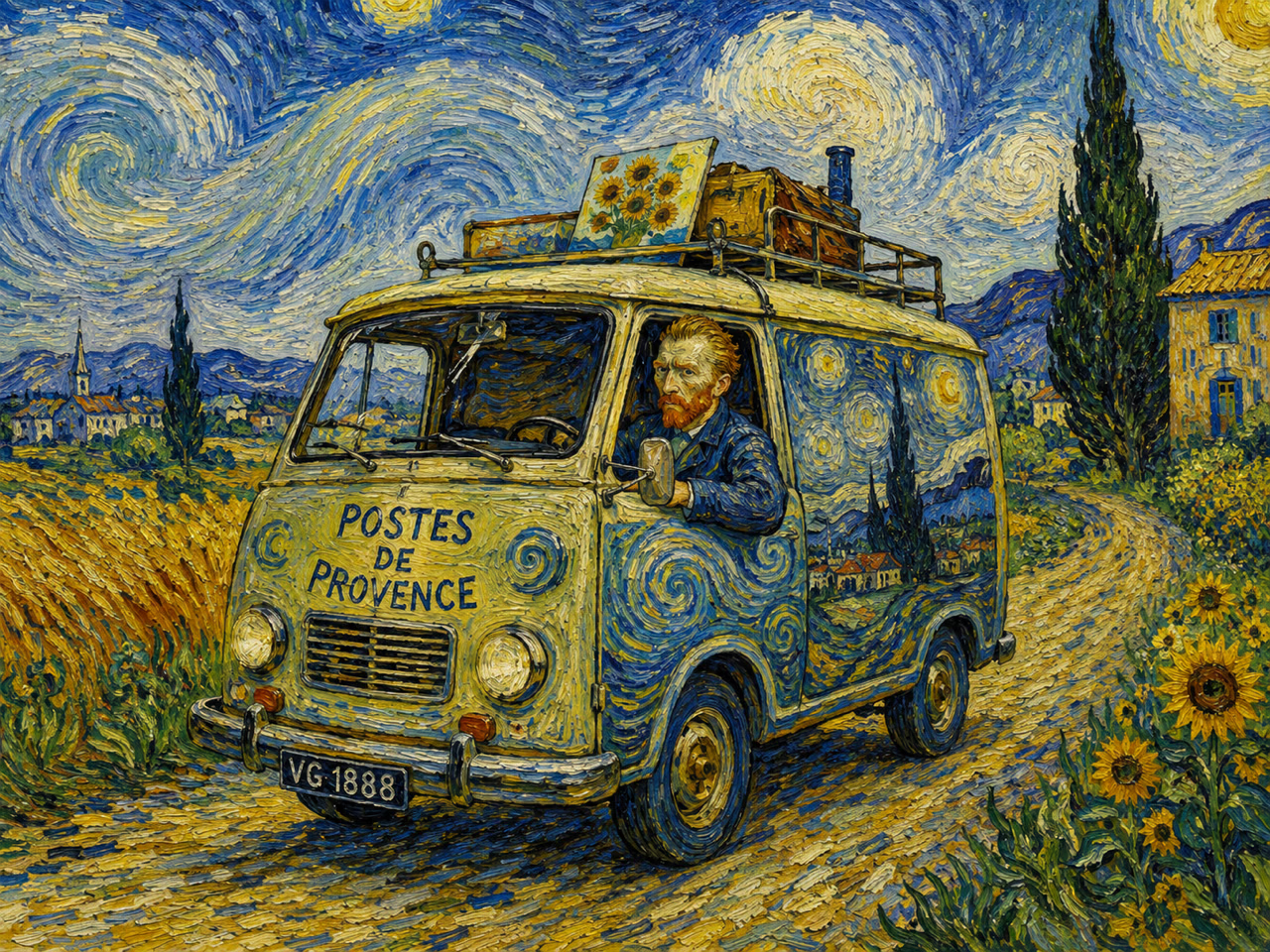
The van makes movement visible while withholding any certainty that arrival will follow. A second painting, secured to the roof, converts the vehicle into both transport and exhibition architecture. The vehicle carries the work through the landscape while exposing its dependence upon infrastructures usually excluded from the frame. Authorship is therefore displaced from the studio into a logistical field in which the work’s destination becomes part of its meaning.
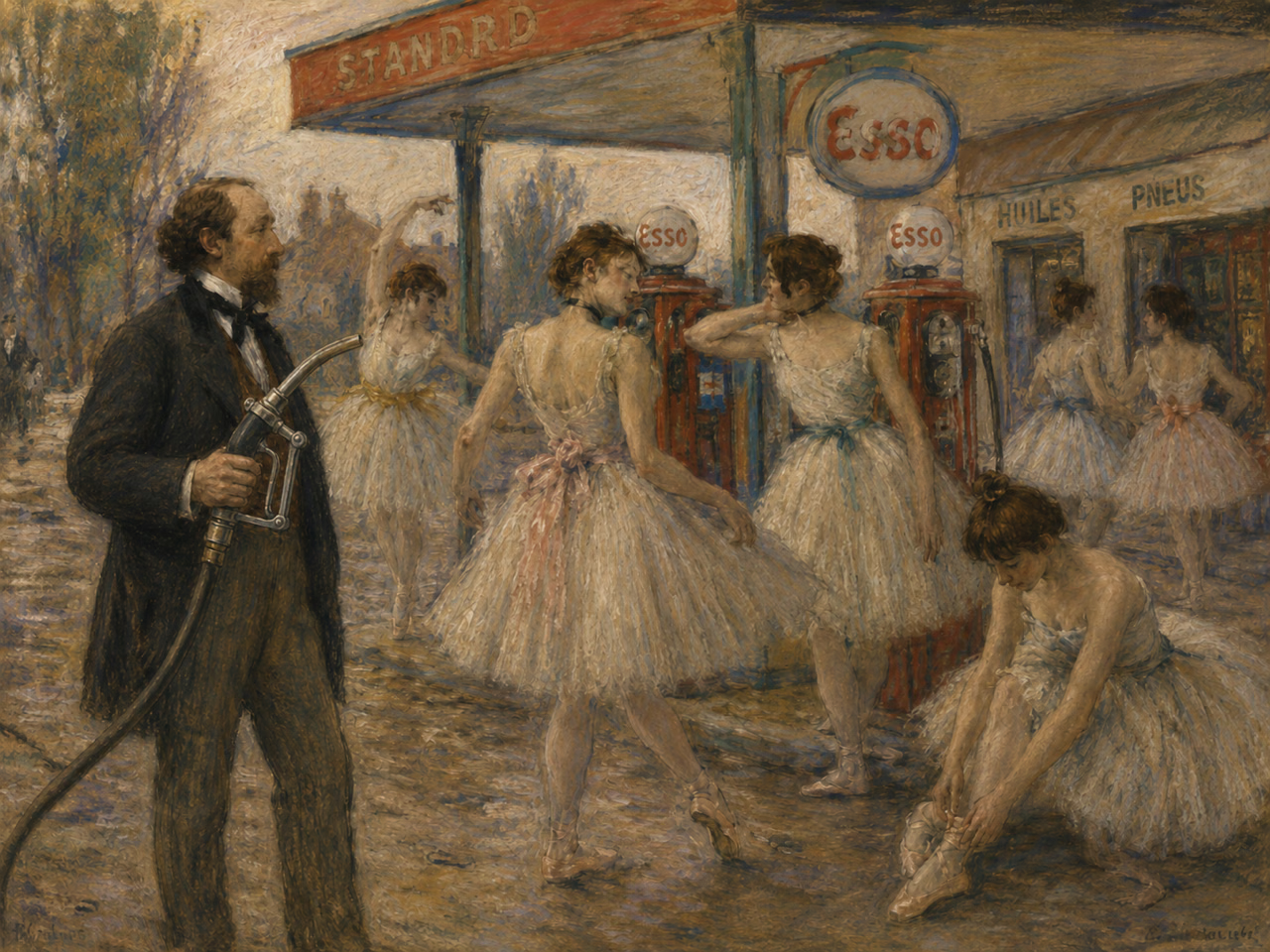
The nozzle extends the artist’s hand into an economy of fuel, discipline and repeated movement. Around him, dancers rehearse gestures whose apparent effortlessness depends upon forms of energy supplied elsewhere. His position between the pump and the dancers makes service difficult to distinguish from participation. The hand that supplies energy belongs to the same field of effort as the bodies that expend it.
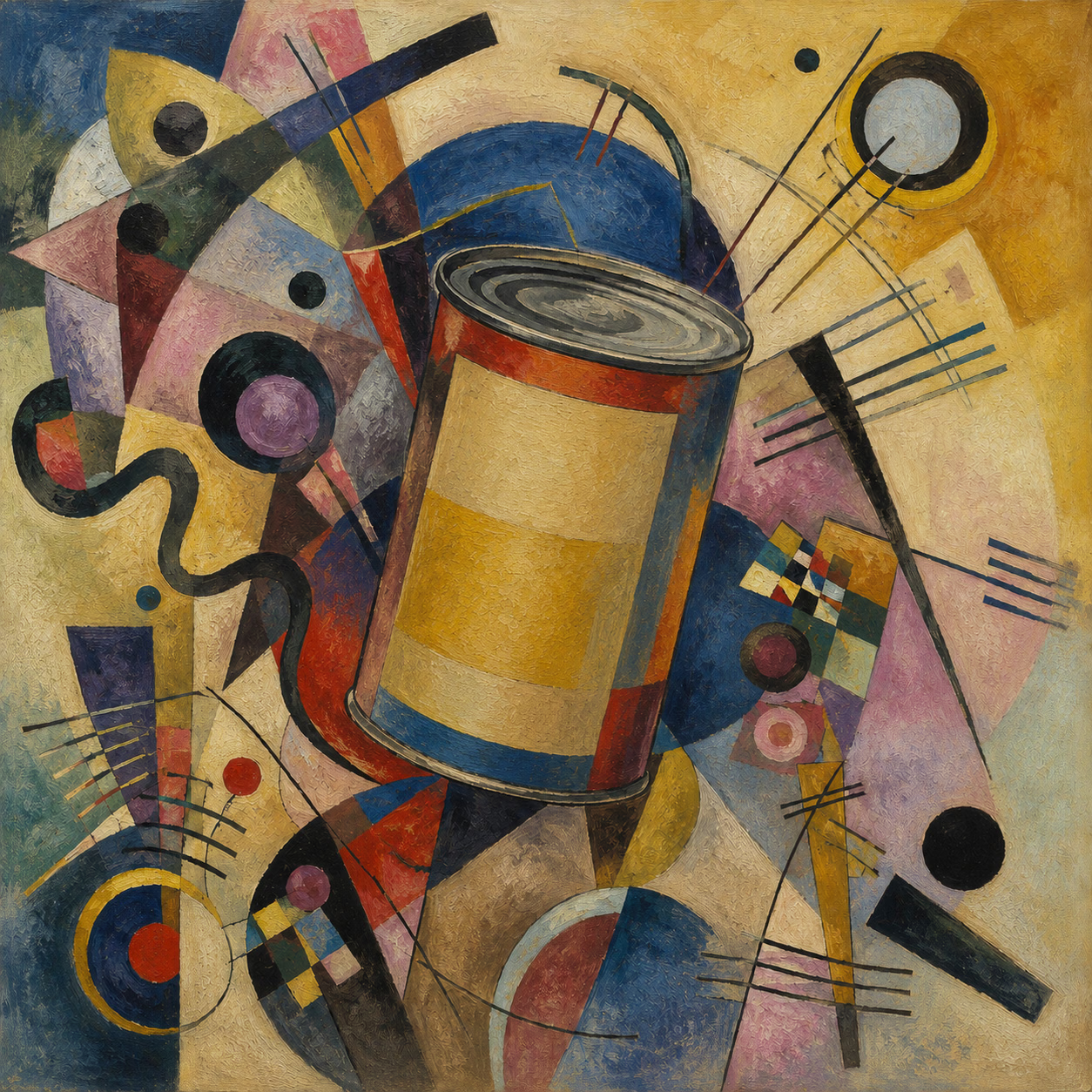
The can occupies the composition as a volume that is materially present yet epistemically sealed. Lines approach it, touch its perimeter and depart without gaining access. Earlier scholarship identified peas; subsequent work proposed beans. Opening the can would settle the question while destroying the interpretive community that has formed around it. The sealed container places a limit within abstraction: a material interior whose existence can be inferred but whose character cannot be established.
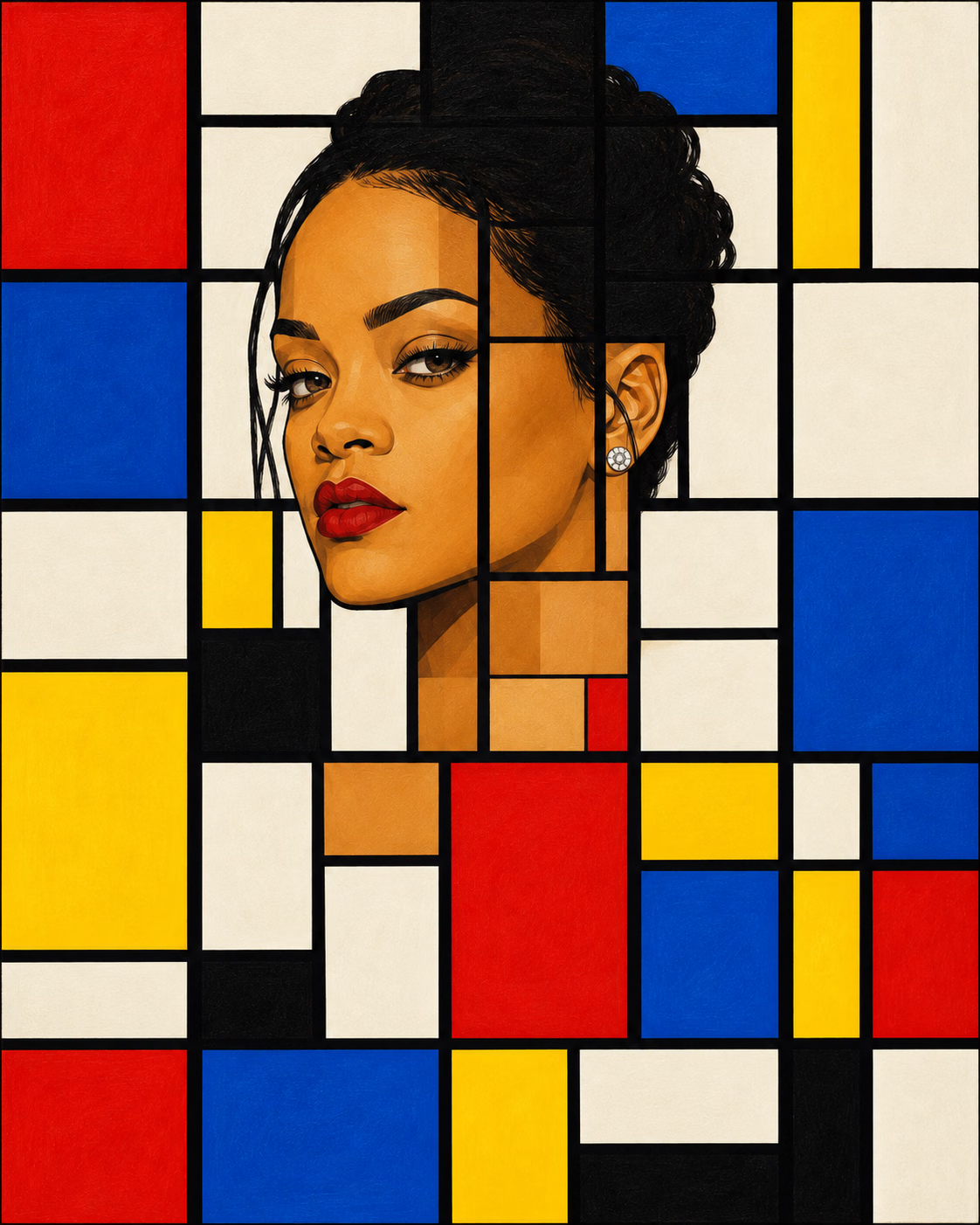
The grid promises to release painting from the obligation to resemble anyone. The face occupies several rectangles, retaining its identity through changes in colour and proportion. Red, yellow and blue establish a universal language whose universality now depends upon knowing who she is. Celebrity supplies a shared point of reference within a language conceived as independent of individual subjects.
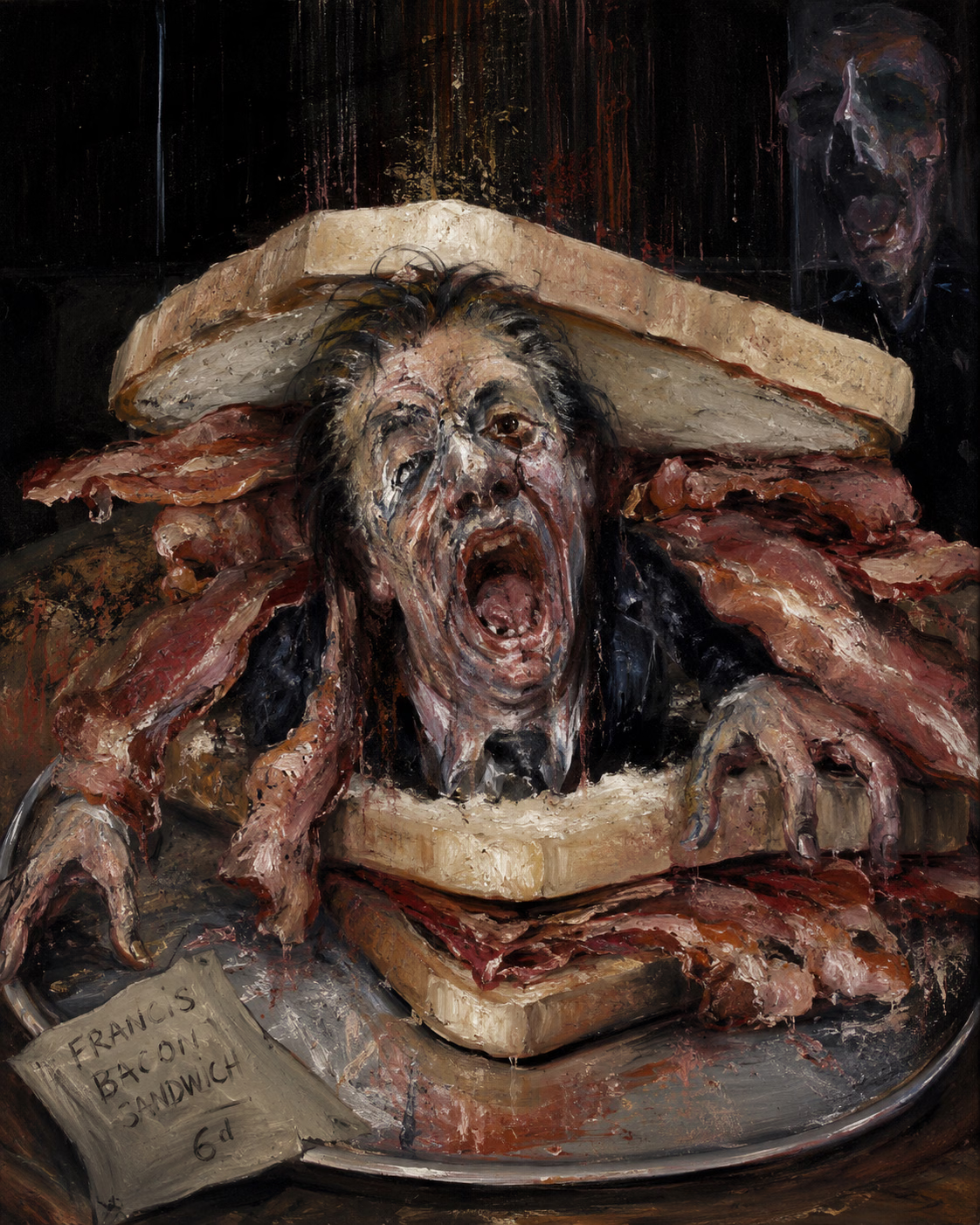
Framing becomes compression as the body is reorganised between bread. The surrounding bacon denies any stable distinction between portrait and filling, while the price card introduces value without clarifying what the sixpence includes. The scream may register bodily exposure, existential refusal or an objection to the absence of mayonnaise. The open mouth becomes the point at which the figure resists its conversion into something available for consumption.
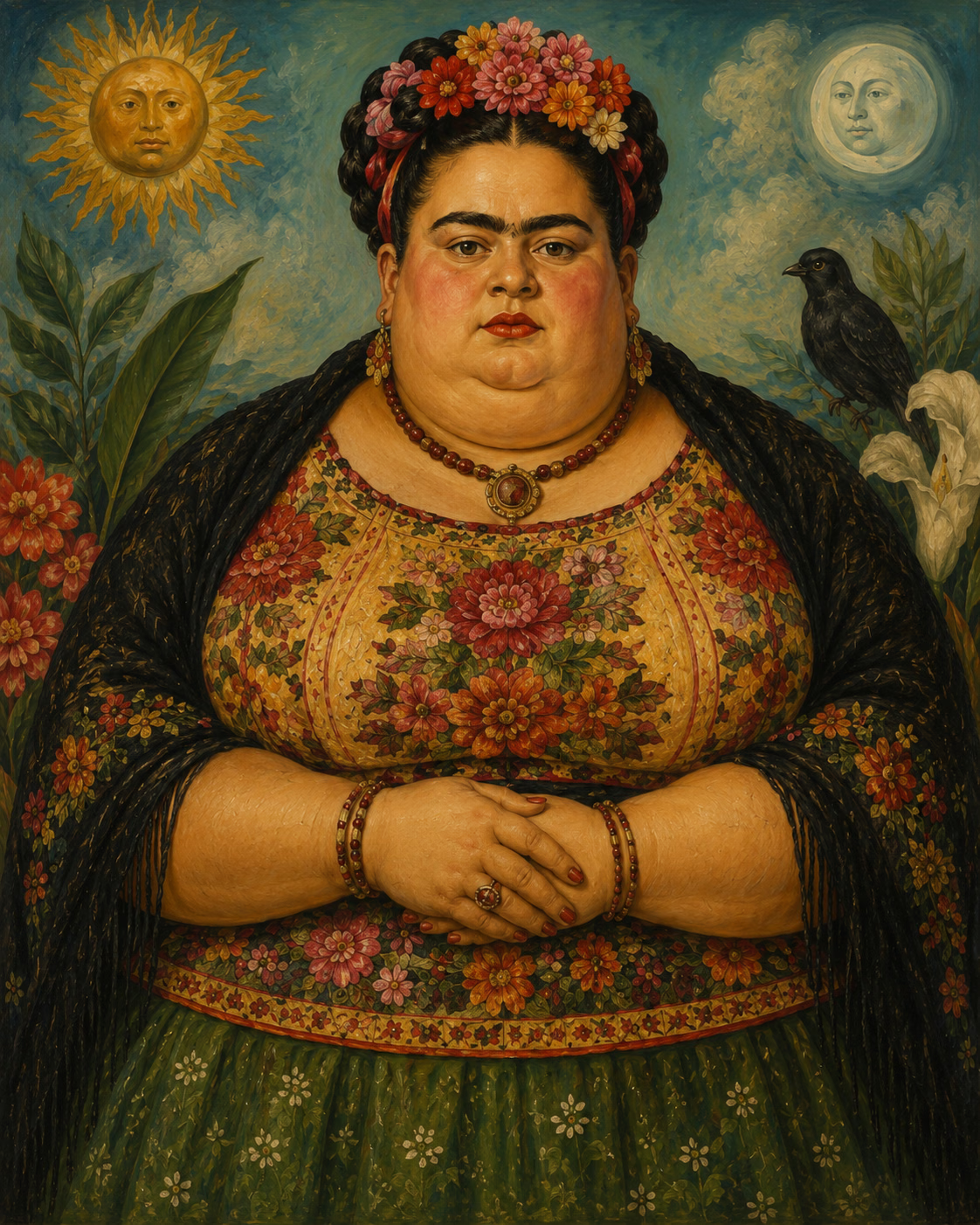
Kahlo’s expanded body refuses the portrait’s traditional promise that identity can be contained by an edge. Flowers multiply across dress, landscape and crown until decoration becomes an ecology of appetite. Sun and moon observe without intervening, positioning consumption within a cosmic rhythm of intake and expenditure. The bird appears to be withholding a personal remark.
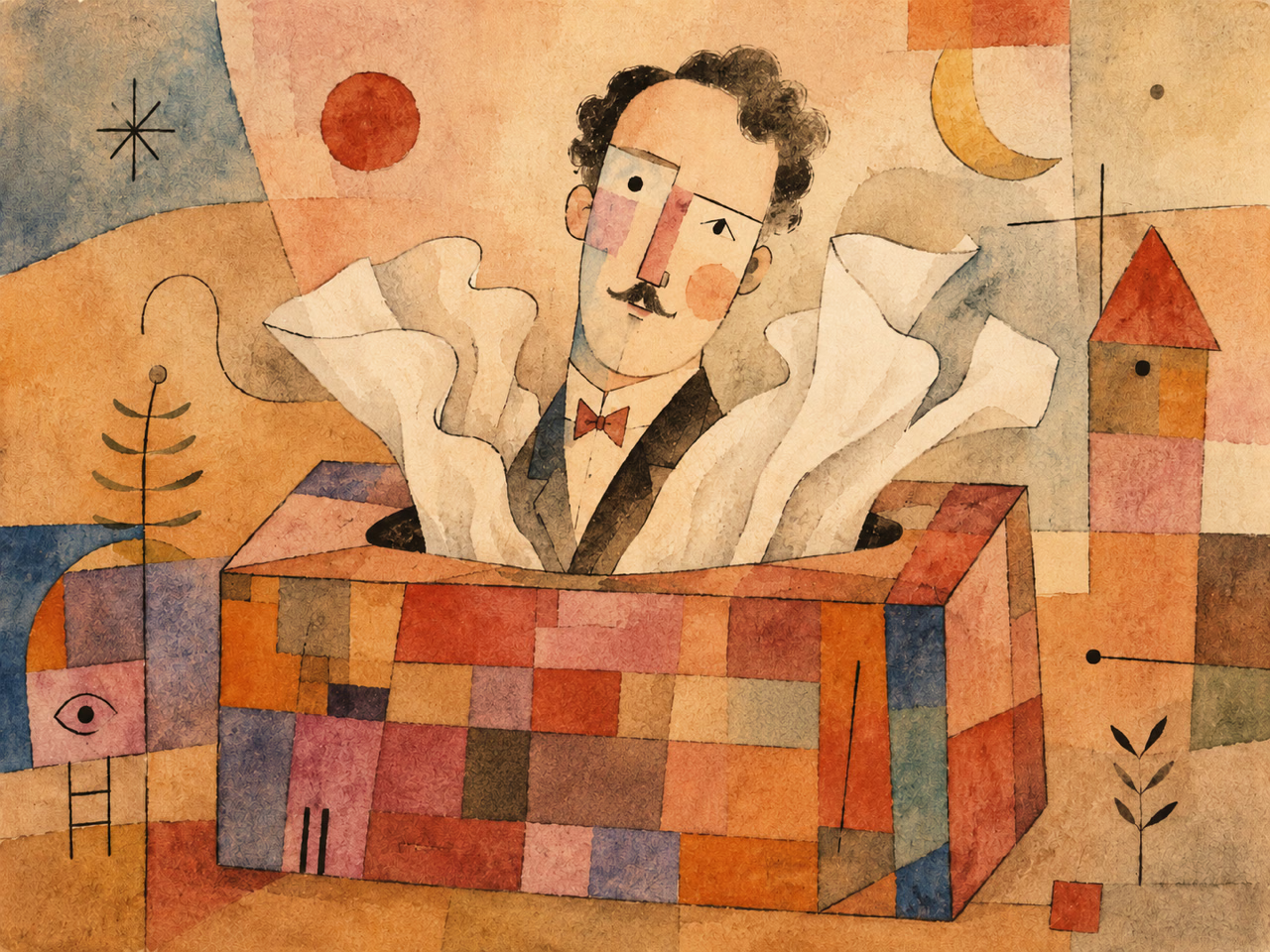
The face appears at the point where tissue leaves the box, locating individual emergence within a system designed to produce the next individual immediately. Softness functions here as both care and planned disposability. The face remains suspended at the opening, between the security of containment and the vulnerability of being drawn out.
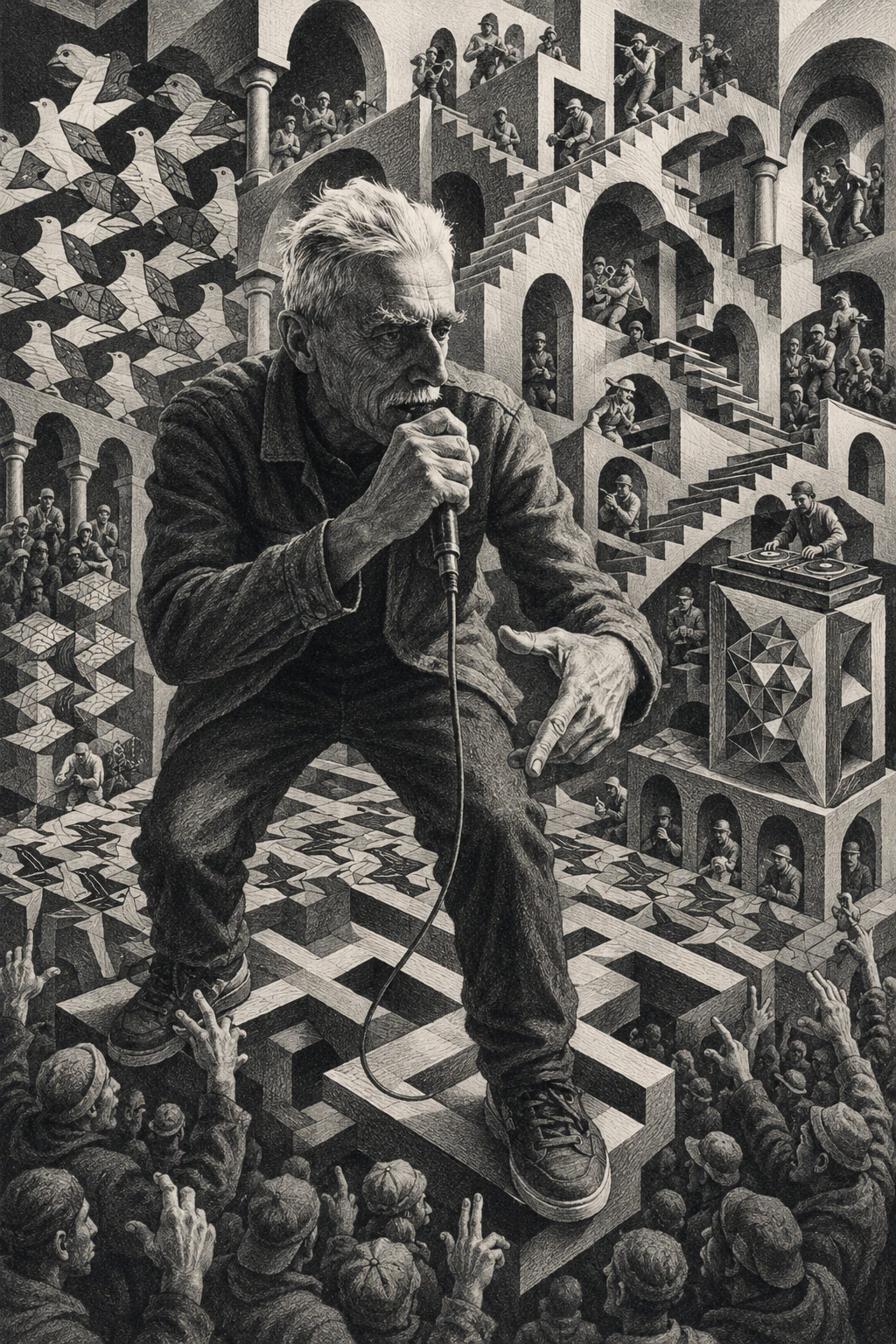
The microphone proposes a single centre of address while the architecture distributes its audience across incompatible planes. Each crowd may understand itself to be facing the performer; no view can confirm these claims together. The work gives public address a spatial contradiction: its listeners share an event without sharing a common ground.
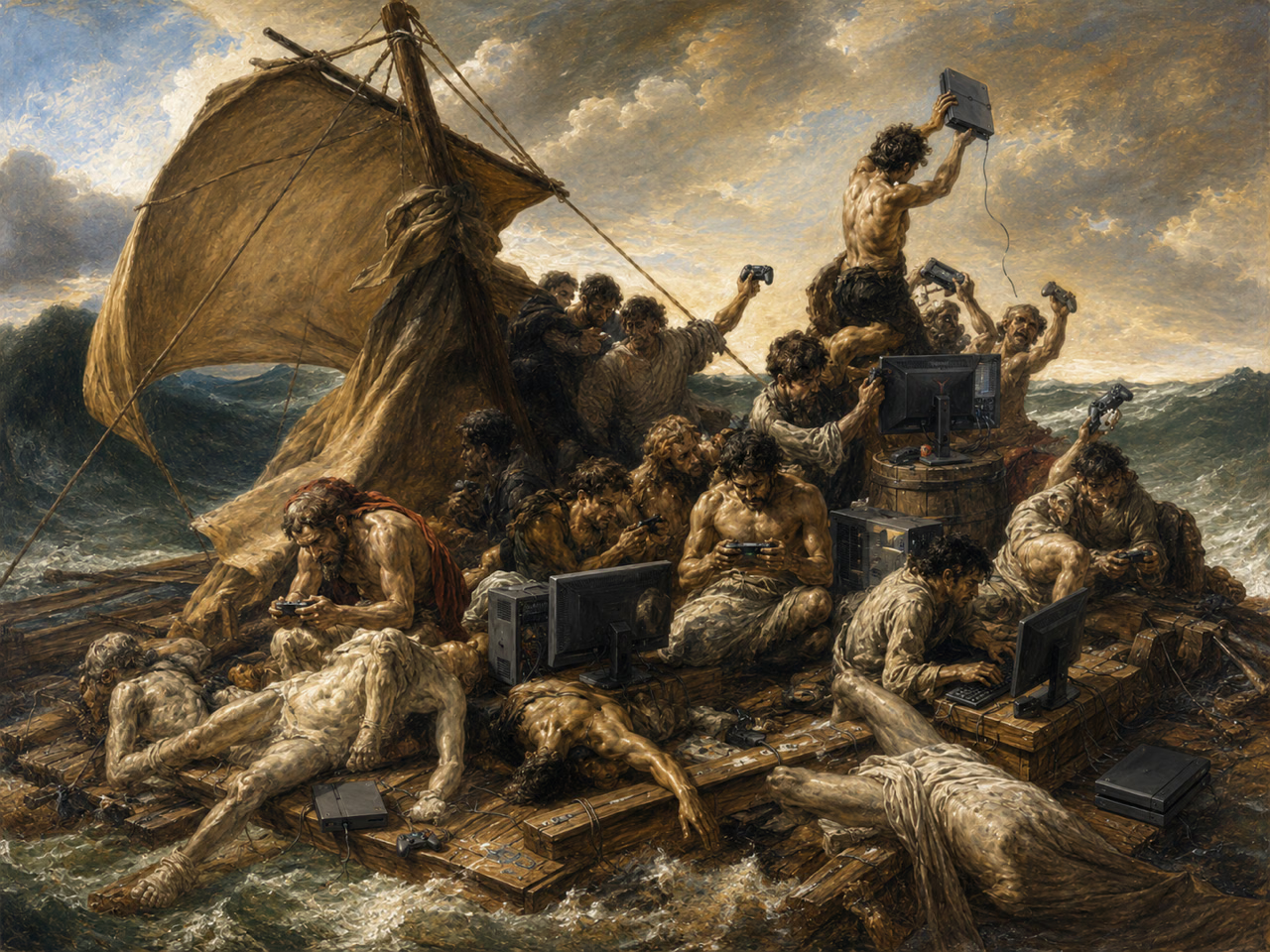
The raised console redirects the composition’s appeal towards a horizon understood primarily as signal. Below it, bodies occupy privately negotiated fields of action within a shared catastrophe. The sea threatens everyone, while the screens supply enemies who can be identified and defeated. Within the screens, violence has objectives, opponents and a visible measure of progress. The surrounding catastrophe offers none of these assurances.
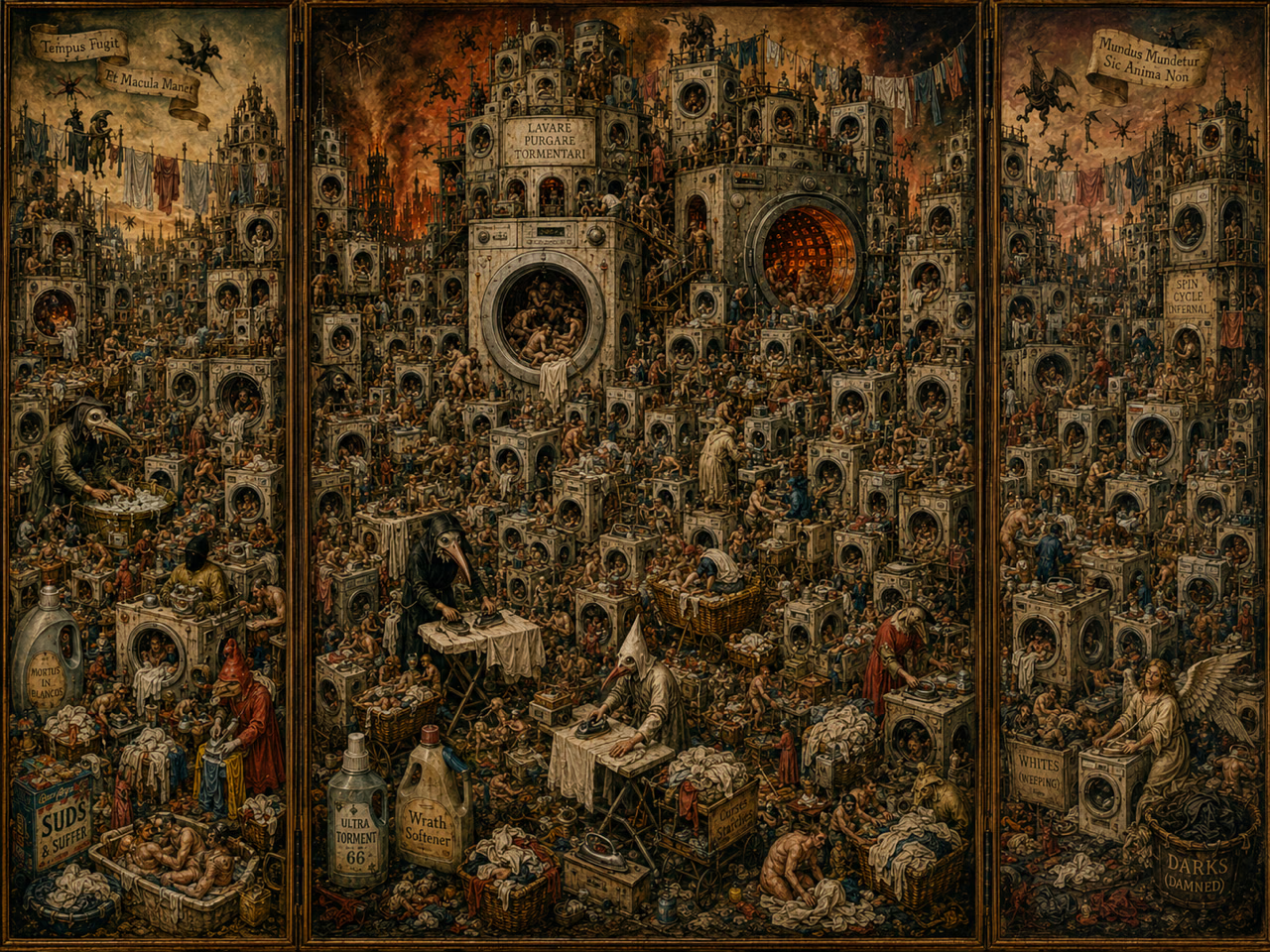
Across the three panels, purification becomes a process of sorting, immersion and exposure to heat. Bodies pass through mechanisms whose orderly operation offers little reassurance about their purpose. The distinction between a stain and a sin remains unsettled, although both appear to require treatment. Salvation assumes the form of a domestic procedure, repeated with considerable confidence in the equipment.
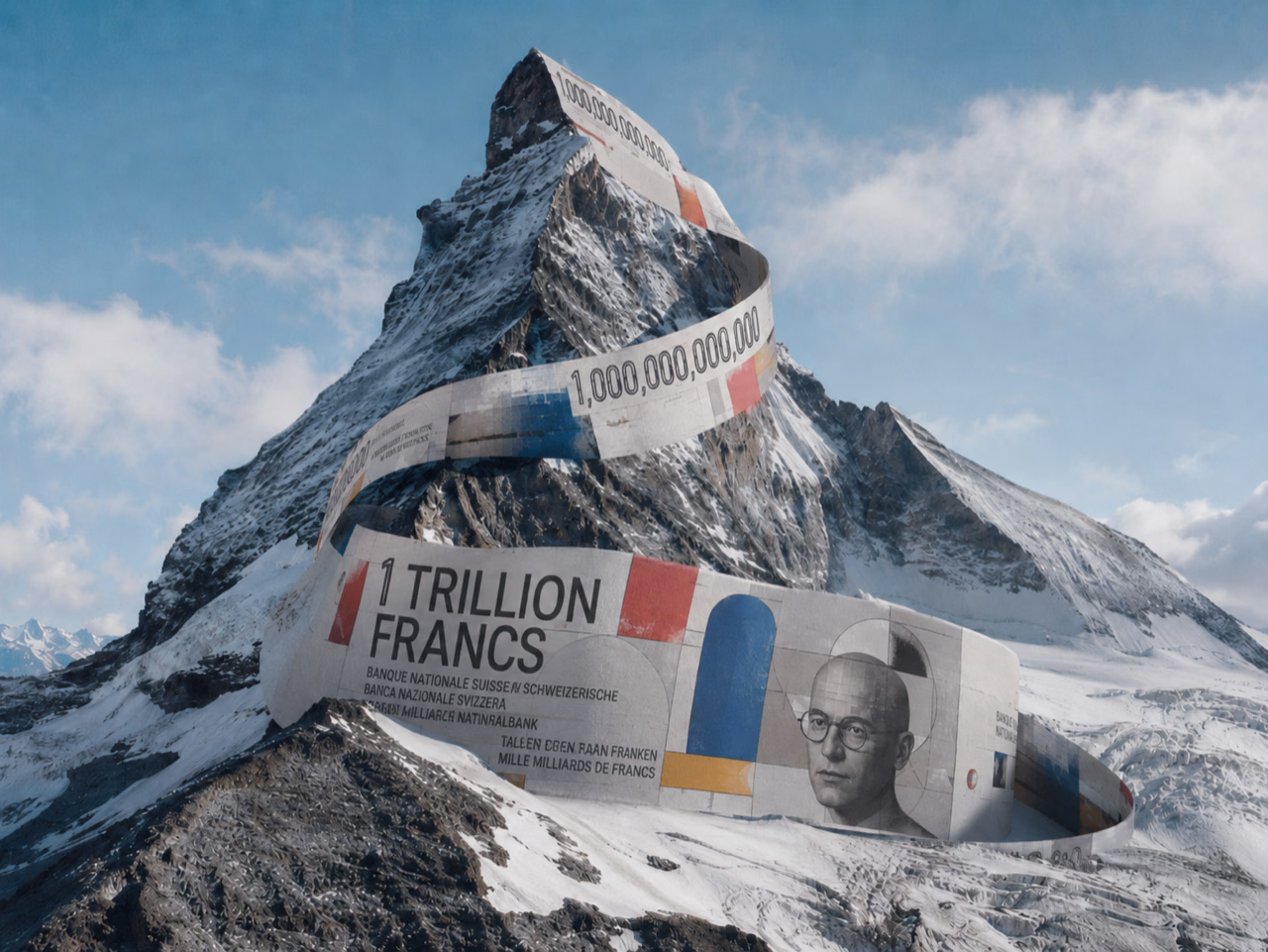
A denomination not yet required by the Swiss National Bank wraps the Matterhorn in a continuous gesture, binding together two national reserves. The mountain supplies scale; the note supplies valuation. The mountain becomes the physical support for a promise of exchange, while the note redraws its contours as the limits of a possession.
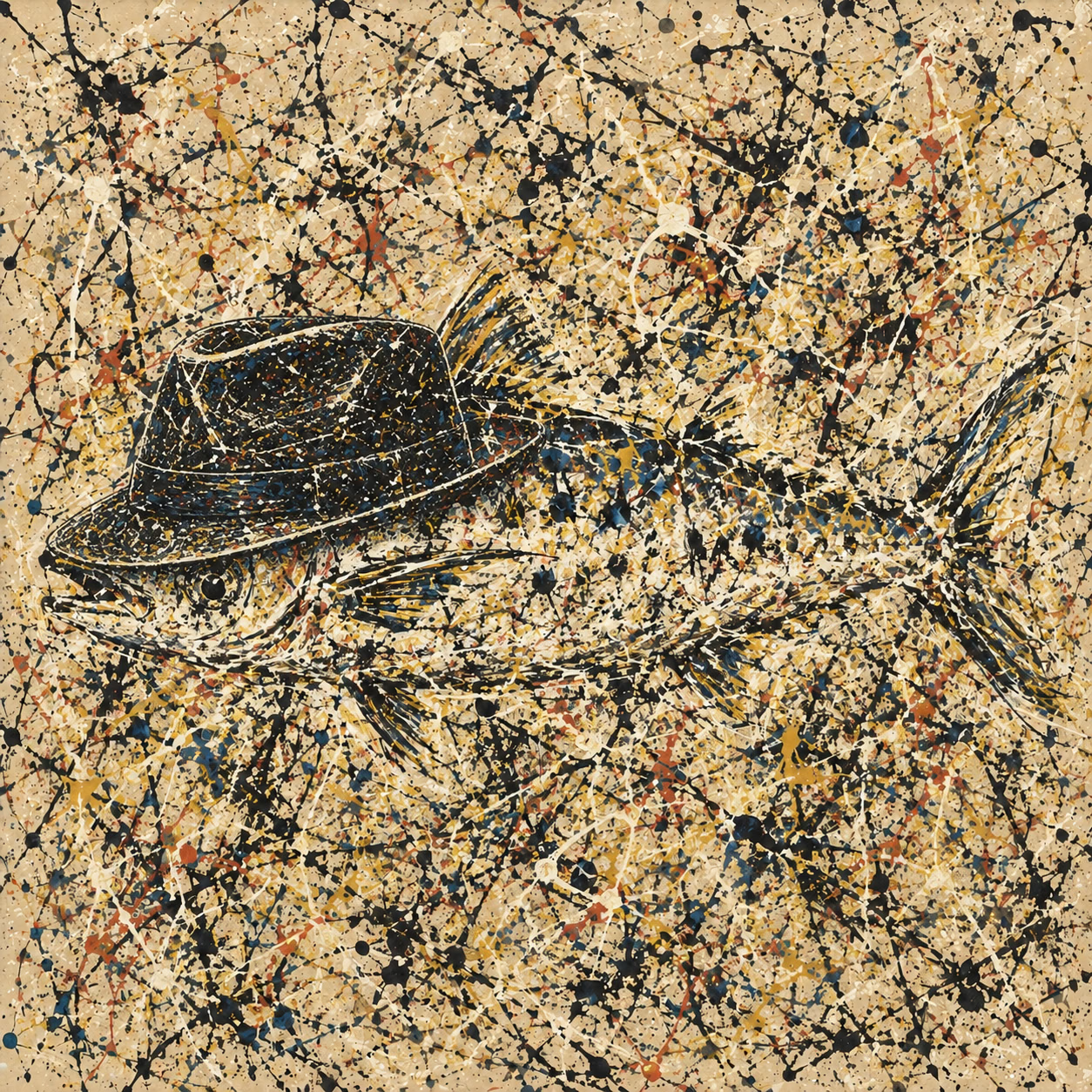
The fish emerges from the all-over field not as a figure placed upon abstraction, but as abstraction’s own delayed recognition of its body. Hat and gesture introduce performance into the horizontal logic of the pour. The figure’s emergence leaves the surrounding field unresolved, allowing bodily recognition and material dispersal to remain active together.
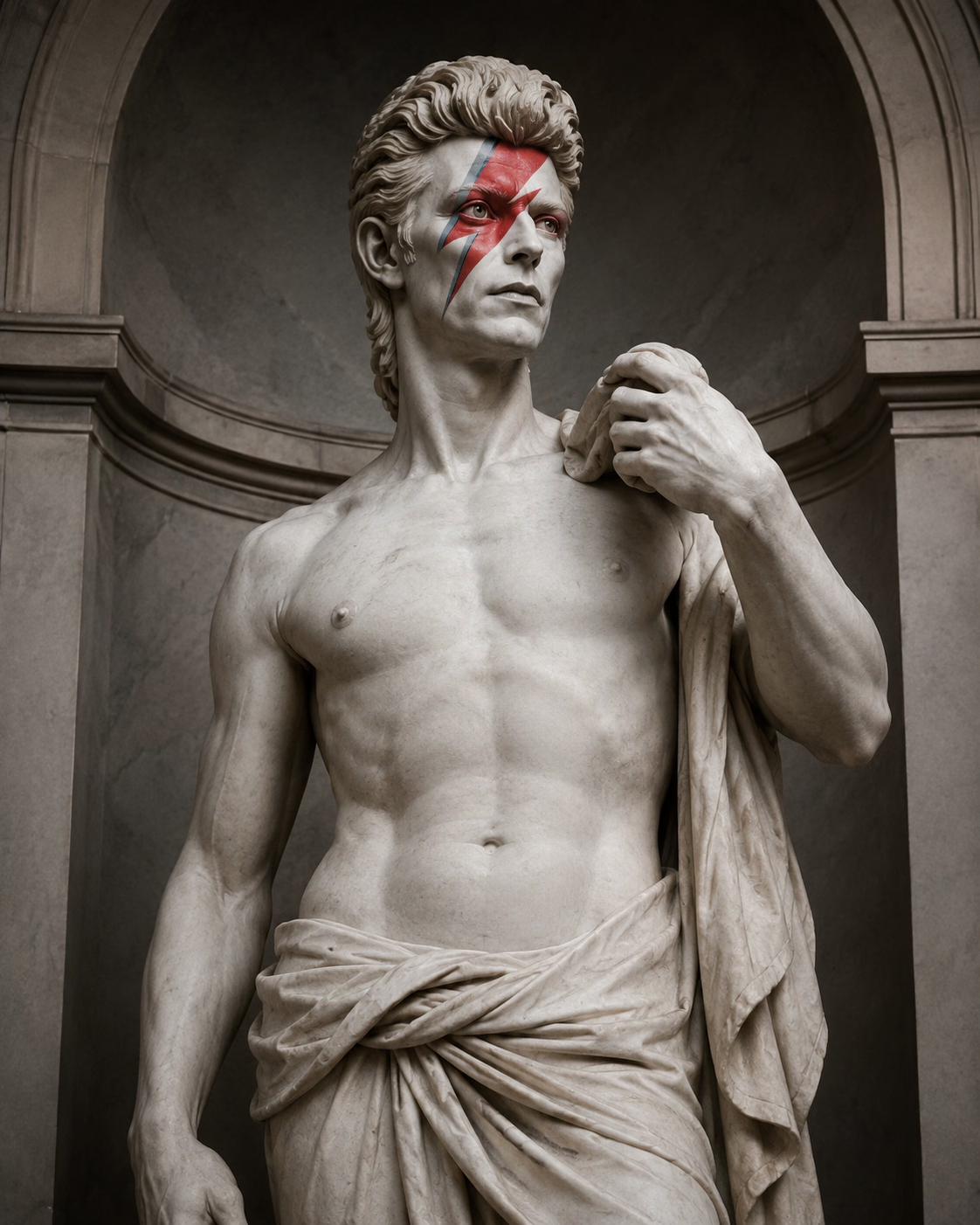
Renaissance permanence encounters the modern demand for reinvention. The lightning bolt establishes that nudity need not prevent an elaborate stage persona. The body remains available to antiquity while the face prepares to address a different crowd.
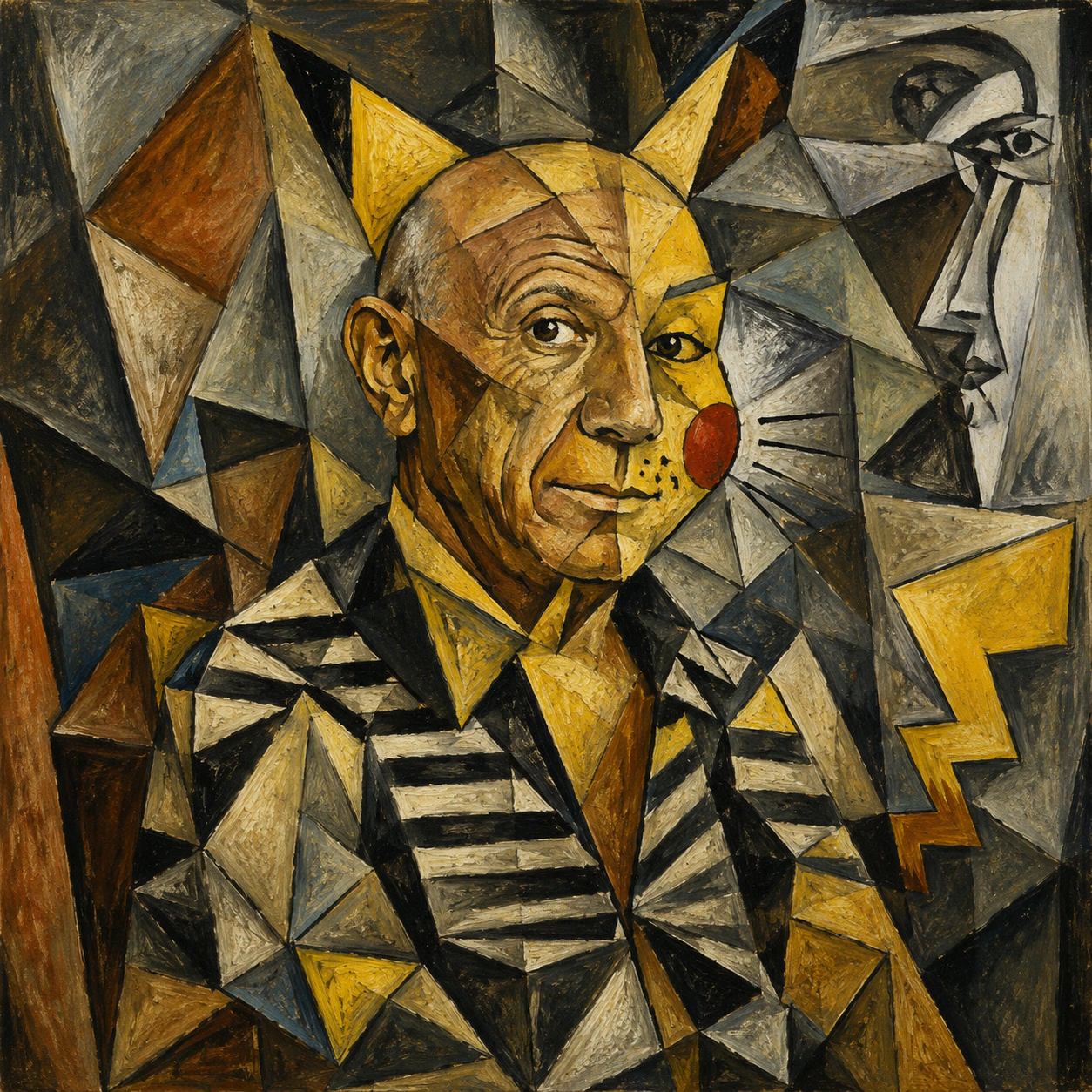
Multiple viewpoints organise the face around an energy that cannot be contained by anatomical continuity. The red cheek functions as reservoir, wound and compositional counterweight. The face resists conventional classification, though the Pokédex provisionally assigns it to Electric/Cubist. Its principal attack is the simultaneous presentation of incompatible viewpoints.
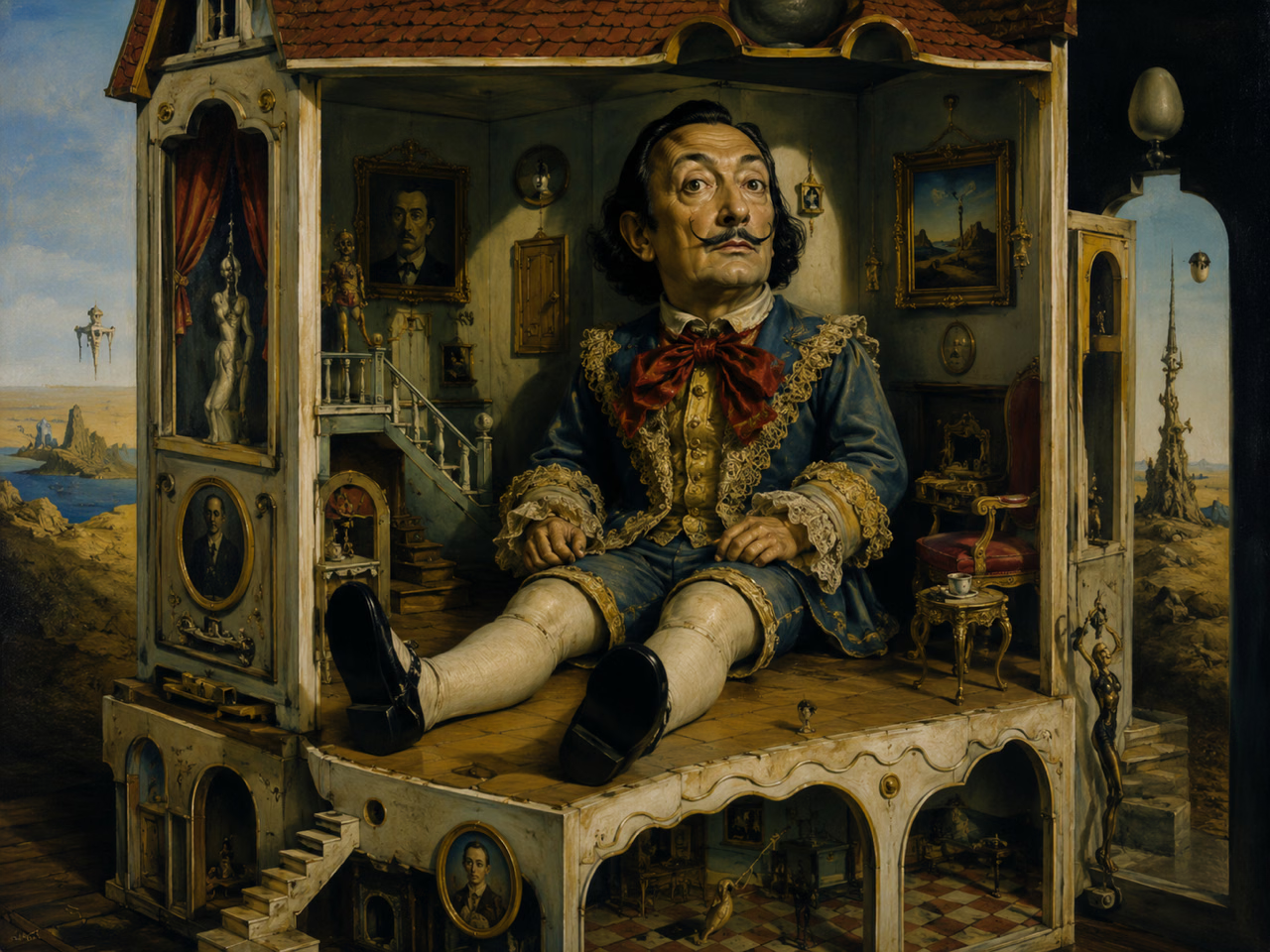
The open house makes interiority architectural and architecture available for play. The figure occupies its centre at a scale too large for the rooms yet too settled to leave them, converting domestic space into a theatre of self-possession. Each miniature door promises another unconscious chamber. The rooms can be rearranged, but the inhabitant continues to regard each new arrangement as a discovery about himself.
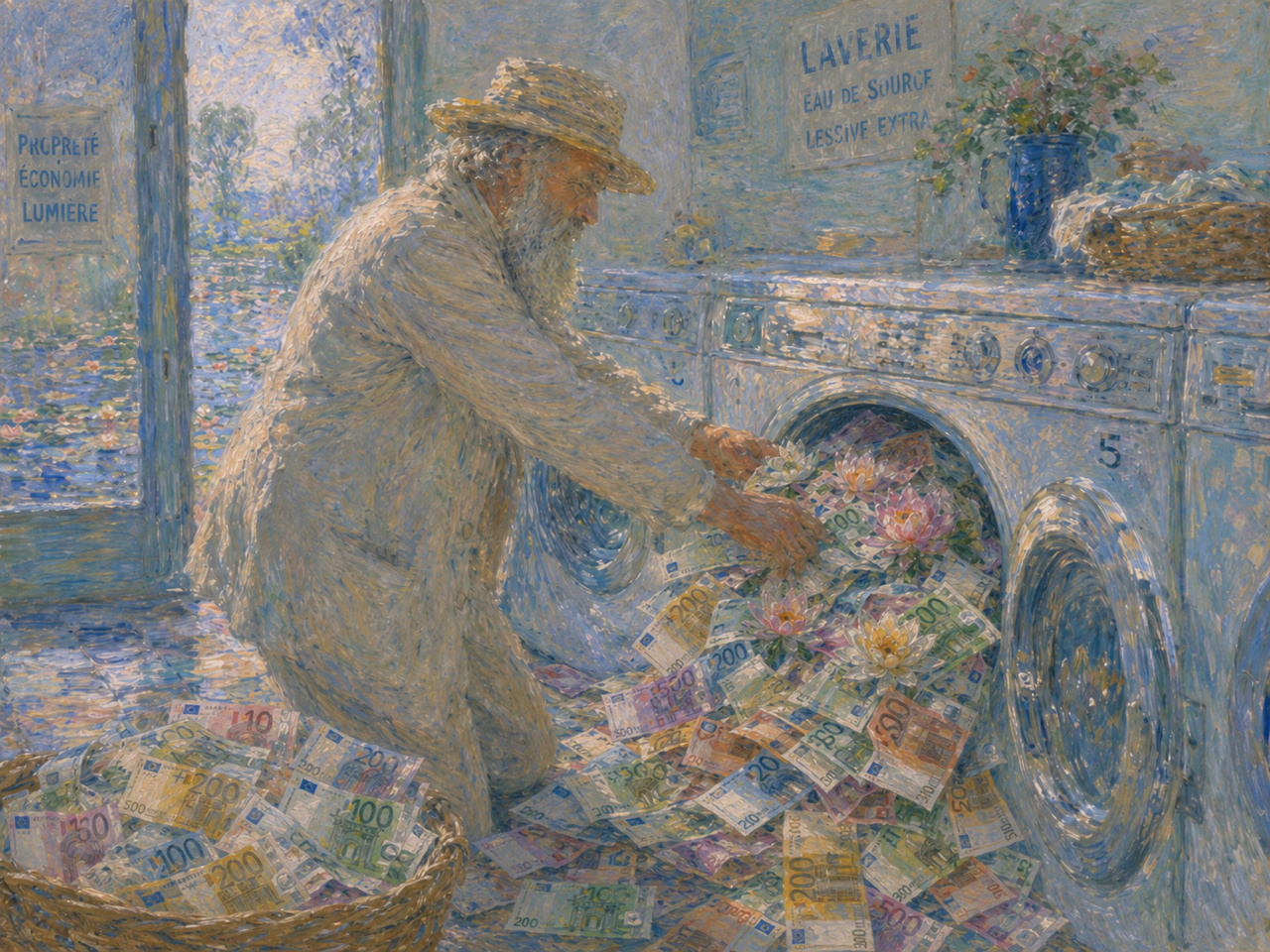
Light draws money, flowers and machinery into a shared economy of colour. Denominations remain legible at the edges of forms already becoming petals, as value enters a cycle that promises renewal through agitation. The work holds monetary and pictorial value within the same field of attention, allowing colour to loosen distinctions that denomination seeks to preserve.